Department of Genetic Bases of Breeding
Grain-quality genetics and source material for breeding varieties of special technological use.
About the department
The department of the genetic foundations of breeding was created by O. O. Sozinov; the unit was later headed by his pupil Fedir Oleksandrovych Poperelia. Alongside him, O. I. Rybalka (corresponding member, current head of the department), M. G. Parfentiev, O. M. Khokhlov and others worked for many years. Today the department studies the genetics of grain quality and develops source material for breeding varieties of special technological use.
Implementation of the department’s developments in 2026
Based on the report of the head of department O. I. Rybalka, 26 September 2026.
Coloured cereal grain
This year the Plant Breeding and Genetics Institute created, for the first time in Ukraine, promising breeding lines of winter wheat with black grain, in whose kernels two colours — blue and purple — are genetically combined. They are produced by polyphenolic anthocyanin pigments with powerful antioxidant activity: cyanidin, delphinidin, pelargonidin, malvidin, peonidin and petunidin, whose names, as can be seen, come from the colours of the corresponding flowers. The same pigments found in the grain of our coloured cereals are widely present in coloured berries and fruits.
The coloured-cereal breeding material we have created comprises prototypes of new, unique wheat varieties with radically improved functional nutritional properties of the grain and of the products made from it (Fig. 1).
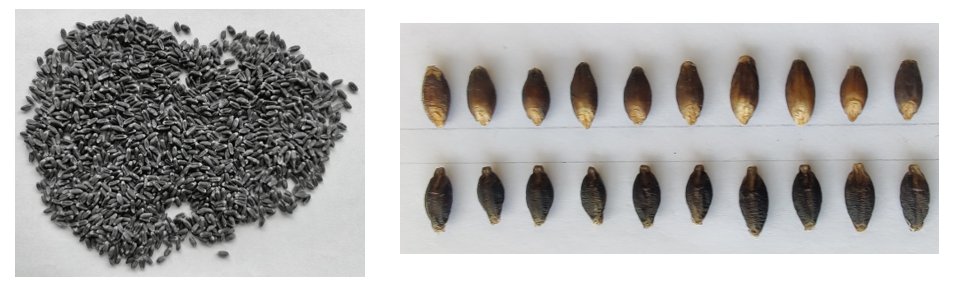
The first promising breeding lines of winter food hulless barley with black grain and satisfactory agronomic traits have also been created. Like the wheat, they genetically combine purple and blue anthocyanin antioxidant pigments with phytomelanin antioxidant pigments — the latter being unique to barley grain.
From the breeding populations we have isolated a unique genetic recombinant of hulless barley with solid black kernel colouring (Fig. 1). Genetically combining blue and purple (as in wheat) plus brown (barley phytomelanins) gives barley grain and its processed products the most powerful antioxidant activity.
Dietary antioxidants provide reliable protection of the human body against oxidative stress caused by highly reactive ROS–RNS free radicals formed with the participation of oxygen and nitrogen. ROS–RNS free radicals cause severe, life-threatening diseases such as cancer, cardiovascular pathologies, type 2 diabetes and others. Antioxidant protection is perhaps the only dietary means of neutralising aggressive free radicals; it slows ageing, prolongs active life and reduces the risk of the conditions mentioned above.
Food products from the grain of future black-grained varieties of winter wheat and food hulless barley, enriched with antioxidant pigments, can be regarded functionally as dietary preventive protection of the human body against these diseases.
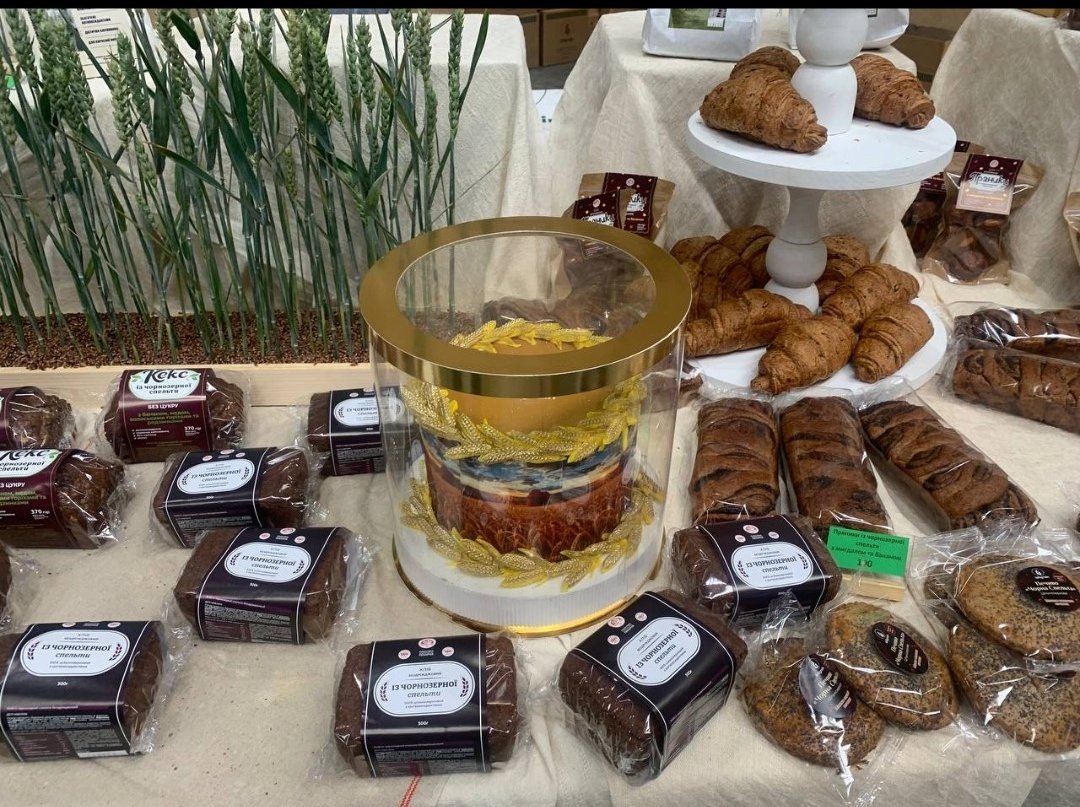
Our partner, Biligrain Food (Khmelnytskyi region), currently produces and supplies to the region’s retail network a whole range of whole-grain flour products made from purple-grained wheat and dark-purple-grained spelt (Fig. 2).
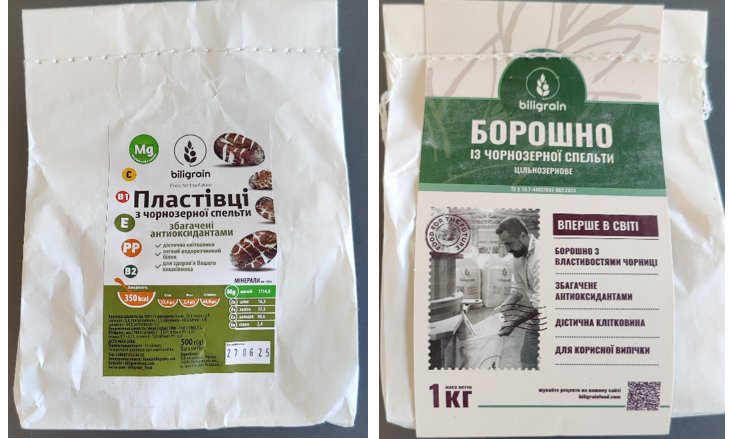
Besides these products, Biligrain Food also supplies whole-grain flour and flakes of spelt and black-grained hulless barley to the retail network (Fig. 3).
Since the antioxidant pigments in coloured grain are located in the seed coat and the aleurone layer, the processing technology for coloured cereal grain calls for the exclusive use of whole-grain flour in food production, which in turn significantly enhances the nutritional functionality of coloured grain.
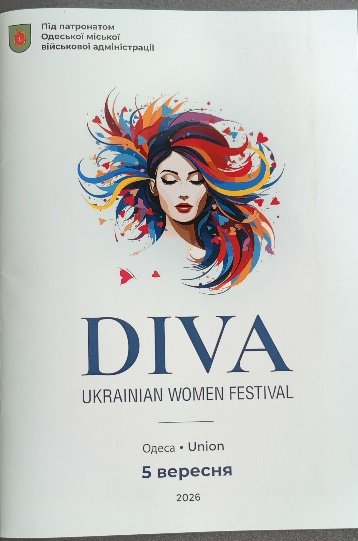
On 5 September this year Biligrain successfully showcased its range of food products from coloured wheat, spelt and food hulless barley at the Ukrainian women’s festival DIVA in Odesa (Figs. 2, 4).
Triticale variety Albina
In addition to the successful implementation of our research on coloured cereal grain, we have also achieved successful implementation of our work on creating and using our unique winter triticale variety Albina.
The triticale variety Albina has a number of unique characteristics: ideal spike threshing, excellently filled grain, high drought tolerance and grain productivity exceeding practically all known winter wheat varieties, as well as high resistance to practically all leaf and stem diseases in the regions where Albina is grown — from Volyn to Odesa.

According to our laboratory research, the triticale variety Albina has outstanding distilling characteristics, such as a high yield of absolute potable ethanol per tonne of grain (over 400 l) with unique taste qualities.
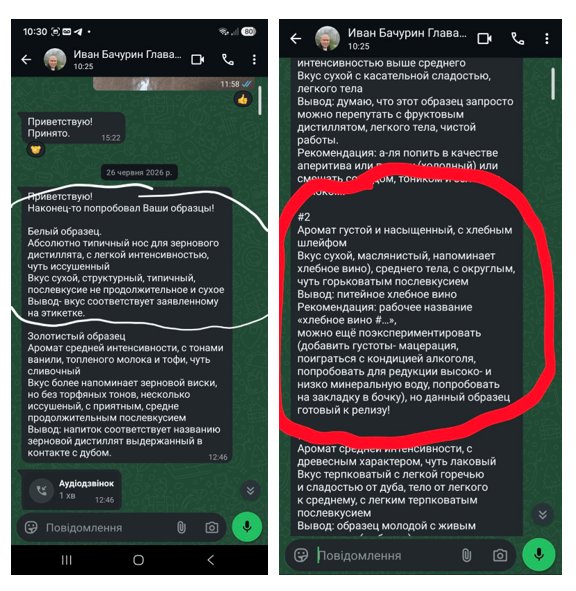
This year we introduced the Albina variety into industrial production of potable ethanol together with the private Odesa craft company Odeska Huralnia. The first samples of potable ethanol made by Odeska Huralnia from Albina triticale grain received the highest quality rating from the well-known Ukrainian sommelier Ivan Bachurin, head of the Sommelier Association of Ukraine (Fig. 5).
Ivan Bachurin professionally described the potable ethanol from the triticale variety as having “an aroma of medium intensity with notes of vanilla, baked milk and toffee”. According to the sommelier, its taste “resembles grain whisky with a pleasant, medium-length finish” (Fig. 6).
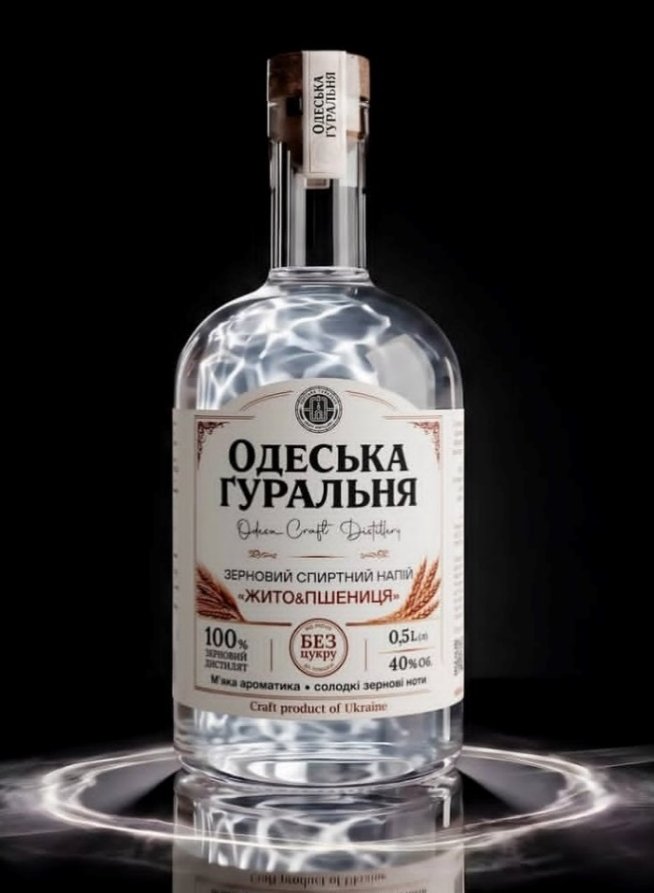
Following the professional sommelier’s high rating of the ethanol from Albina triticale grain, Odeska Huralnia launched serial production of its new vodka brand “ZHYTO + PSHENYTSIA” (Rye + Wheat) (Fig. 7). The name was chosen because the word “triticale” (a rye–wheat hybrid) is practically unknown to the average consumer.
In 2026 the “ZHYTO + PSHENYTSIA” vodka is already on sale in supermarket chains in Odesa and the Odesa region. We have well-founded hopes that this brand will be the first swallow in a wider spread of new quality spirits (whisky, beer) made from the Albina triticale variety on Ukraine’s large and profitable alcoholic-beverage market.