Department of Wheat Breeding and Seed Production
Breeding and pre-basic seed production of universal-type soft winter wheat varieties with a genetic yield potential above 10 t/ha and the grain quality of strong and extra-strong wheat.
Mykola A. Lytvynenko
Chief Researcher, Academician of NAAS, D.Sc. (Agriculture), Professor
About the department
The department breeds and maintains pre-basic seed of universal-type soft winter wheat (Tr. aestivum) with a high and steadily increasing genetic yield potential (above 10 t/ha), the grain quality of strong and extra-strong wheat, and pronounced adaptive properties (disease resistance, frost and winter hardiness, drought tolerance, etc.). The varieties withstand biotic and abiotic environmental factors. This combination allows them to realise their yield potential on high-input backgrounds and to keep a relatively high minimum yield in extreme weather and on medium- and low-input backgrounds.
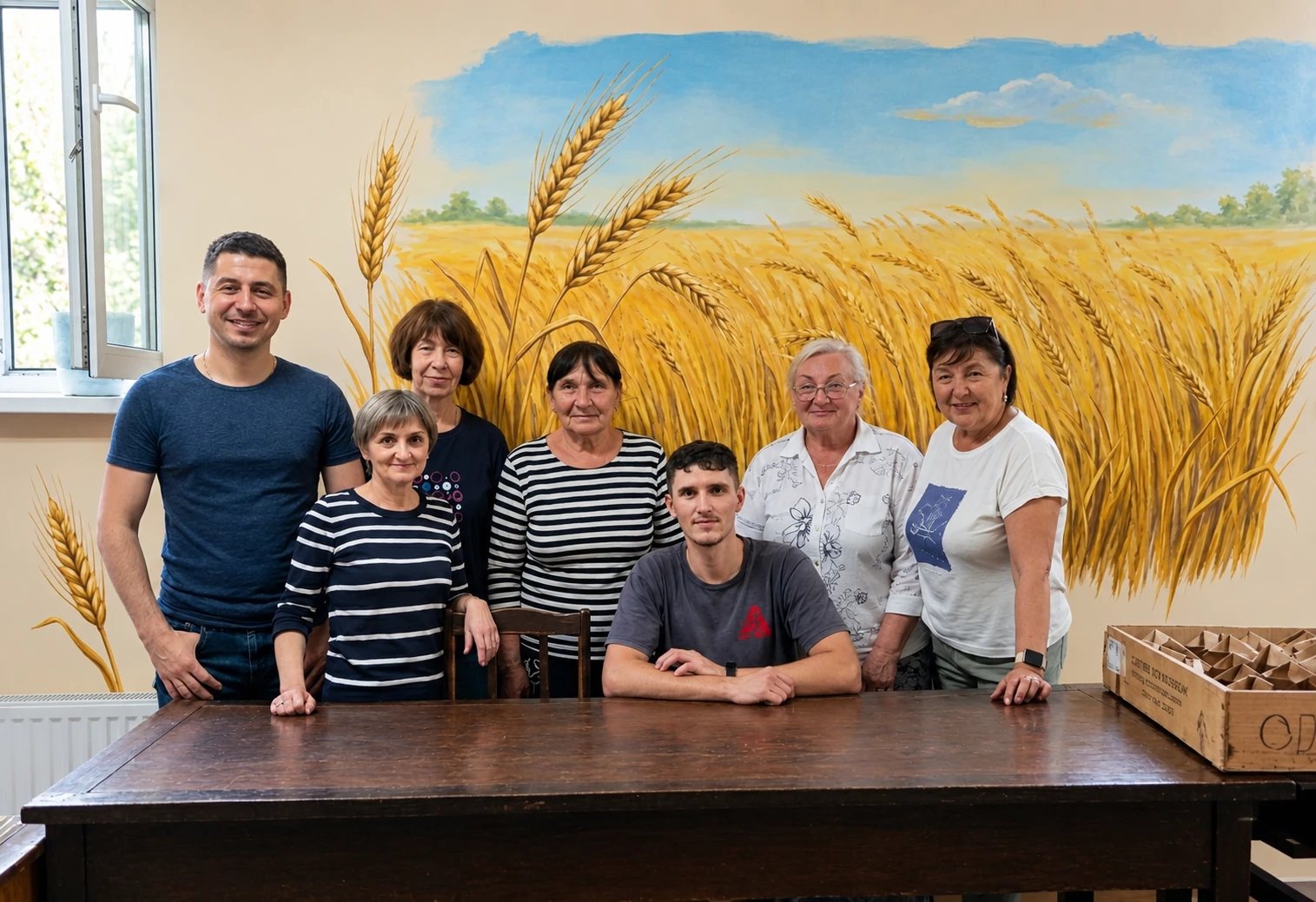
Department history
- 1912The department (breeding station) was founded under Professor A. O. Sapiehin. Three soft winter wheat varieties were created, grown on a total of 1.3 million ha.
- 1936–1986The department was headed by Academician of VASKhNIL F. H. Kyrychenko. Seven soft winter wheat varieties were created and zoned, grown on a total of 156 million ha in the former Soviet Union. The average number of researchers was 8.
- 1987–2025The department was headed by Academician of NAAS M. A. Lytvynenko. 87 soft winter wheat varieties were created, zoned and entered into Ukraine’s Register, grown on a total of 108 million ha in Ukraine. The average number of researchers was 6; at present it is 5.
Main research directions
- Scientific-methodical research on improving the breeding-process technology using modern biotechnological methods of producing doubled haploids and molecular methods for identifying and marking valuable traits.
- Developing and improving methods of creating genetic diversity, specially created genetic sources and donors of agronomically and biologically valuable traits in intraspecific and wide hybridisation using various crossing schemes.
- Studying new and promising lines for their response to contrasting agronomic backgrounds (sowing dates, seeding rates, preceding crops, nitrogen rates) at two ecologically distant locations — PBGI NCSCI and the Pokrovske research farm. This allows a preliminary agrobiological description in the year a variety is registered and the elements of variety-specific agronomy within the next 2–3 years.
- Pre-basic seed production of commercial varieties using the full scheme — 22–28 varieties over the last 10 years — plus primary seed production of 4–6 varieties in State Variety Testing each year. The department produces 82–112 t of pre-basic nursery seed (RR-1, RR-2) annually for NAAS research farms and seed farms licensed for elite (pre-basic) seed production.
- Developing shortened pre-basic seed-production schemes depending on how long a variety has been in production and its genetic status; taking part in soil control, certification of seed crops and bringing seed to high sowing standards.
The programme for breeding universal-type soft winter wheat follows two main lines:
- varieties with high and stable yields for different agronomic backgrounds, including simplified wartime technology, with strong and extra-strong grain quality;
- varieties for environmentally clean (organic) farming with complex or group disease resistance, minimising the use of chemical plant protection.
NAAS research programme task
The department carries out a fundamental task of NAAS research programme No. 15 “Breeding and seed production of cereal, groat and grain-legume crops adapted to different soil-and-climate zones”:
Key scientific achievements
An improved breeding-process technology has been developed that optimally combines traditional methods and schemes with modern methods of producing androgenic doubled haploids and molecular-genetic control of individual traits. It shortens the breeding process by 3–4 years (6–7 years instead of the traditional 10–12) and raises breeding efficiency by 15–20%. The scientific-methodical manual “Improved technology of the soft winter wheat breeding process using biotechnological and molecular-genetic methods” was published on this development.
It has been experimentally proven that pre-basic seed production is more efficient when different schemes are used depending on how long a variety has been in production and on its level of heterogeneity. Biocenogenetic principles of forming balanced variety populations have been proposed and published in the scientific-methodical manual “Biocenogenetic processes in variety populations and their role in breeding and primary seed production of soft winter wheat”.
The department has scientifically substantiated and implemented a qualitatively new programme for breeding universal-type soft winter wheat, developed for more than 25 years. The results were presented in the doctoral thesis of M. A. Lytvynenko, now Academician of NAAS, “Theoretical foundations and methods of breeding soft winter wheat for increased adaptive potential in the Steppe of Ukraine”.
Under this programme, from 1992 to 2026 (34 years), 87 universal-type varieties with progressively improved traits have been created and entered into Ukraine’s State Register. In yield alone, under identical testing conditions (2006–2025), it rose from 5.4 to 8.5 t/ha compared with Odeska 51, a well-known variety of the previous stage — by 3.1 t/ha (57.4%) — and from 6.5 to 8.5 t/ha compared with Albatros odeskyi, the first universal-type variety — by 2.0 t/ha (30.7%).
Over the last 10 years (2015–2025) Ukraine’s Register has included 22 to 32 of the department’s universal-type varieties: each year 2–3 varieties that have served their time are withdrawn and 2–5 new, better ones are registered. The longest-serving were the “million-hectare” varieties, each grown on 1 to 4 million ha a year: Albatros odeskyi (1992–2005), Viktoriia odeska (1998–2012) and Antonivka (2008–2022). In recent years (2015–2026) the areas of Mudrist odeska and Katrusia odeska have approached a million hectares.
Six variety replacements have been carried out in Ukraine’s Steppe agroclimatic zone on the basis of universal-type varieties, which are also spreading in the Forest-Steppe and Polissia. At different times a number of varieties have been registered and grown abroad: 21 in Moldova, 4 in Türkiye and 2 in Hungary.
“Million-hectare” varieties
Stages of the breeding programme
The development of the soft winter wheat breeding programme can be divided into 11 stages:
- I · 1912–1928Individual selection from local population varieties. Tall pure-line varieties of the extensive type (Zemka, Kooperatorka, Stepniachka).
- II · 1929–1938Intervarietal hybridisation of pure-line extensive varieties. Improvement of extensive-type varieties (Odeska 3, Odeska 12, Odeska 16).
- III · 1939–1949Hybridisation of ecologically and geographically distant forms. Tall semi-intensive varieties (Volna, Stepova, Odeska 22, Odeska 26).
- IV · 1950–1971Hybridisation of local varieties with intensive varieties bred by the Krasnodar Agricultural Research Institute — Bezosta 4, Bezosta 1, Avrora, Kavkaz. Tall intensive varieties of steppe ecology (Novostepniachka, Prybii, Yuzhanka, Yuzhnoukrainka).
- V · 1972–1980Breeding of semi-dwarf varieties on the genetic basis of mutant forms and the American varieties Gaines and Nugaines. The first semi-dwarf varieties (Saliut, Prohres, Erytrospermum 604, Yunnat).
- VI · 1981–1992Hybridisation of local varieties with short-stemmed spring wheats from CIMMYT, the USA and India carrying Rht1–3 genes and with the Yugoslav varieties Zlatna Dolina, Novosadka Rana, Partizanka and others. First-generation medium-height universal-type varieties (Albatros odeskyi, Yakor odeskyi, Ukrainka odeska, Krasunia odeska, Fantaziia odeska and others).
- VII · 1992–2000Development of the universal-type soft winter wheat breeding programme. Varieties for different agronomic backgrounds with distinctive characteristics to stabilise grain production (Znakhidka odeska, Pysanka, Kosovytsia, Skarbnytsia, Hospodynia, Zemliachka, Fedorivka).
- VIII · 2001–2010Adjusting the universal-type breeding programme to climate change (Antonivka, Epokha odeska, Zahrava odeska, Sluzhnytsia odeska, Hoduvalnytsia odeska, Lytanivka, Misiia odeska, Blahodarka odeska, Nyva odeska, Mudrist odeska).
- IX · 2011–2015Introgression into the local wheat gene pool of alien chromatin from rye (1BL/1RS, 1AL/1RS translocations) and the wild wheat relatives Ae. cylindrica and Ae. tauschii, and of spring synthetics created at CIMMYT. Varieties with further increased overall adaptive potential, productivity and resistance to extreme biotic and abiotic stresses (Zhytnytsia odeska, Shchedrist odeska, Oktava odeska, Liha odeska, Manera odeska).
- X · 2016–2020Searching for ways to further raise grain productivity by involving modern Western European varieties in hybridisation. Varieties created and registered at this stage: Vidpovid odeska, Maksyma odeska, Katrusia odeska, Protektsiia odeska, Peremoha odeska, Pozytsiia odeska.
- XI · 2011–2025Crossing created varieties and lines that differ in genetic origin to combine different genetic systems controlling productivity, grain quality and resistance to biotic and abiotic factors. Varieties registered in Ukraine at this stage: Spadshchyna odeska, Pokrovska, Vyhoda odeska, Udacha odeska, Dobrodiika odeska, Hospodarka odeska, Bohuslavka odeska, Zahadka odeska, Tvorchist odeska, Favorytka odeska, Koroleva odeska, Olimpiia odeska, Mriia odeska, Vira odeska, Nadiia odeska, Hidnist odeska, Zirnytsia odeska.
Current breeding directions
The next stage of the breeding programme aims to create soft winter wheat varieties of different intensity groups:
- Varieties with the highest possible genetic grain-yield potential and the ability to make efficient use of high nutrient rates and other intensification inputs — for farms able to fully meet the technological requirements.
- Varieties with a relatively lower genetic yield potential but with maximally expressed traits ensuring yield stability on medium- and low-input backgrounds; they use reduced nutrient rates more efficiently.
- Varieties for environmentally clean (organic) technologies with maximally expressed resistance to diseases and pests, for producing environmentally clean grain.
First varieties of these groups — in State Variety Testing or being prepared for it
Intensive work continues on further improving grain quality by introducing the alien GPC-B1 genes from Tr. tauschii into hybridisation; they control increased grain protein and micronutrient (zinc, manganese, etc.) content.
Varieties with a white pericarp and high baking quality are being developed for special confectionery products (such as croissants).
Seed production
Pre-basic seed production is essentially a continuation of the breeding process, so at PBGI NCSCI it has long been carried out in the Department of Wheat Breeding and Seed Production with the direct involvement of the breeders who authored the varieties. This makes it possible not only to maintain varietal purity but also to refine — especially new — varieties for distinctness, uniformity and stability during primary seed production. It is a heavy load, accounting for up to 60–70% of the department’s work.
Over time the number of varieties in primary seed production has ranged from 2–3 to 30–35. For the last 10 years pre-basic seed production has covered 22–28 commercial varieties and 6–8 new varieties in State Variety Testing each year. The full scheme (RV-1, RV-2, RR-1, RR-2) is generally used, but shortened schemes developed in the department are also applied, depending on how long a variety has been in use and its genetic status (level of heterogeneity), using storage-protein electrophoresis, the sedimentation index and, in some cases, uniformity assessment with molecular markers.
The department’s researchers take part in soil control, field work to bring varieties to the required level of purity and uniformity, certification of seed crops, seed cleaning and the formation of seed lots.
Scientific cooperation
Within PBGI NCSCI, joint research with the Department of Genetic Bases of Breeding under F. O. Poperelia stands out. The evaluation scheme covered, between harvest (July) and sowing (September), analysis of 5–7 thousand samples from the early stages of breeding and seed production and, in autumn and winter, full milling and baking analysis of 350–400 lines in variety trials; the material was analysed by storage-protein electrophoresis. The first super-strong varieties, Panna and Leleka, were created jointly.
Productive work on creating disease-resistant source material was carried out with the Department of Phytopathology under L. T. Babaiants; it is now being resumed under O. A. Vasyliev.
Cooperation with the Biochemistry Laboratory has always been steady and productive under its various heads (A. P. Levytskyi, V. Vovchuk and now O. O. Molodchenkova): improving breeding material by biochemical indicators and analysing, at the department’s request, physiological and biochemical indicators of resistance to biotic and abiotic factors.
With the Department of Genetics (formerly headed by D.Sc. V. I. Fait, with the direct involvement of Academician of NAAS A. F. Stelmakh), the Ppd (photoperiod sensitivity) and Vrn, Vrd (vernalisation requirement) genetic systems were studied in varieties and promising lines, allowing variety models to be adjusted to climate change and production needs; work has begun on lines combining Ppd and Vrd genes that give a facultative (alternative) growth habit.
Each year the department studies introgression lines created in the Department of General and Molecular Genetics by PhD, Leading Researcher I. I. Motsnyi, which are periodically used as parental components. While the Southern Biotechnology Centre in Plant Production operated under Academician of NAAS Yu. M. Syvolap, varieties were certified by molecular formulas, ensuring their full legal protection; research now focuses on molecular identification of disease-resistance genes and alien genes from rye and other wheat relatives (PhD Tokaiev).
Over the years the department has cooperated widely with state research institutions (the Agricultural Research and Development Institute in Fundulea, Romania; the Dobrudzha Agricultural Institute in General Toshevo, Bulgaria) and private companies (Limagrain, France; Strube, Germany; Marmara, Türkiye; Agrostoc, Moldova), exchanging genetic material and scientific information and testing varieties in each country.
Since 1981, after M. A. Lytvynenko (now Academician of NAAS) trained at the International Maize and Wheat Improvement Center (CIMMYT, Mexico), the department has run a broad programme crossing local winter varieties with short-stemmed spring CIMMYT accessions, producing original source material and qualitatively new varieties. When CIMMYT set up its regional winter wheat programme (headquartered in Ankara), the department became an associate member of the CIMMYT–ICARDA–Türkiye programme, enriching its winter wheat collection with material from practically all leading research centres of the world.
M. A. Lytvynenko served on the organising committees of four international wheat conferences and gave plenary talks (7th — Ankara, Türkiye; 8th, 2002 — Budapest, Hungary; 9th, 2006 — Buenos Aires, Argentina; 10th, 2010 — Saint Petersburg). The department’s varieties (Ukrainka odeska, Viktoriia odeska, Syrena odeska) have repeatedly ranked first for yield in international trials run by CIMMYT’s regional centre in Türkiye. In 2019, at CIMMYT’s suggestion, PBGI NCSCI hosted an international conference of leading breeders — programme heads from 19 countries of Europe, Asia, North and Latin America. The varieties registered in Türkiye (Krasunia odeska, Syrena odeska, Misiia odeska, Zahrava odeska) are managed by Yildiz Bitkisel (Tekirdağ).
Services & consulting
- Field days at the institute and at 6–10 farms hosting PBGI NCSCI variety demonstration plots, with detailed information on seed production and growing practices.
- Taking part in regional and national scientific-practical conferences, including those organised by large farms (Olhopil, Vinnytsia region; Balkany, Odesa region).
- Preparing variety catalogues and recommendations on their seed production and growing technologies.
- Consultations for farm specialists, managers and farmers — at the institute and on site.
- Scientific support of seed production at the institute’s research farms and at other seed producers holding a licence agreement with the institute.
- Taking part in field inspections of seed crops together with an authorised state seed inspector during field certification.
Department publications
Scientific articles32
- Lytvynenko M. A. Key milestones of 100 years of soft winter wheat breeding at the Department of Wheat Breeding and Seed Production of PBGI NCSCI (review). Collected Scientific Papers of PBGI NCSCI. Odesa, 2016. Iss. 27. P. 9–22. (in Ukrainian)
- Lytvynenko M. A. Creating soft winter wheat (Triticum aestivum L.) varieties adapted to climate change in southern Ukraine. Collected Scientific Papers of PBGI NCSCI. Odesa, 2016. Iss. 27. P. 36–53. (in Ukrainian)
- Lytvynenko M. A., Feoktistov P. O., Blyshchyk D. V., Havrylov S. V. Improving the anthrone method for determining soluble carbohydrates in tillering nodes of winter wheat to assess crop condition during overwintering. Bulletin of Agricultural Science. 2017. No. 4. P. 41–45. (in Ukrainian)
- Lytvynenko M. A., Holub Ye. A. Efficiency of the SDS-30 sedimentation method in breeding soft winter wheat (Triticum aestivum L.) for baking properties. Collected Scientific Papers of PBGI NCSCI. Odesa, 2017. Iss. 29. P. 6–18. (in Ukrainian)
- Lytvynenko M. A., Holub Ye. A. Theoretical aspects of breeding soft winter wheat (Triticum aestivum L.) genotypes with extra-strong grain quality. Collected Scientific Papers of PBGI NCSCI. Odesa, 2017. Iss. 30. P. 9–23. (in Ukrainian)
- Lytvynenko M. A., Khomenko T. M., Holub Ye. A. Creating and identifying soft winter wheat (Triticum aestivum L.) varieties with extra-strong baking properties. Plant Varieties Studying and Protection. Kyiv, 2018. Vol. 14, No. 1. P. 66–75. (in Ukrainian)
- Lytvynenko M. A., Lytvynenko D. M., Shcherbyna Z. V., Ihnatovskyi O. O. Homogeneity and heterogeneity of genotypes during pre-basic seed production of soft winter wheat (Triticum aestivum L.) varieties. Plant Breeding and Seed Production. 2019. Iss. 116. P. 71–82. (in Ukrainian)
- Molodchenkova O. O., Motsnyi I. I., Lytvynenko M. A., Holub Ye. A. Using introgression lines of soft winter wheat to increase grain protein content. Plant Breeding and Seed Production. 2019. Iss. 115. P. 75–92. (in Ukrainian)
- Lytvynenko M. A., Lytvynenko D. M., Shcherbyna Z. V. Genetic balance of biotypes in heterogeneous soft winter wheat (Triticum aestivum L.) varieties during pre-basic seed production. Plant Breeding and Seed Production. 2019. Iss. 115. P. 112–124. (in Ukrainian)
- Motsnyi I. I., Lytvynenko M. A., Molodchenkova O. O., Sokolov V. M., Fait V. I. Creating soft winter wheat source material using interspecific crosses for breeding for increased protein content. Cytology and Genetics. 2019. Vol. 53 (2). P. 21–33. (in Ukrainian)
- Motsnyi I., Lytvynenko M., Golub E., Nargan T., Nakonechnyy M., Lyfenko S., Molodchenkova O., Fanin Ya., Mishchenko I., Smertenko A., Mishchenko L. Disease resistance and adaptation of winter wheat lines derived from wide hybridization under arid environments. Zemdirbyste-Agriculture. 2022. 109 (3): 227–236.↗ source
- Zambriborshch I. S., Shestopal O. L., Chekalova M. S., Holub Ye. A. Testing the haploproductive capacity of different soft wheat hybrids in in vitro anther culture. Factors in Experimental Evolution of Organisms. 2020. Vol. 26. P. 207–211. (in Ukrainian)↗ source
- Motsnyi I. I., Molodchenkova O. O., Smertenko A. P., Lytvynenko M. A., Holub Ye. A., Mishchenko L. T. Creating soft winter wheat introgression lines with resistance to phytopathogens. Odesa National University Herald. Biology. 2020. 25 (2 (47)). P. 59–82. (in Ukrainian)↗ source
- Lytvynenko M. A., Holub Ye. A., Lytvynenko R. I., Shcherbyna Z. V. Creating the extra-strong soft winter wheat variety Mudrist odeska and realising its genetic potential. Plant Breeding and Seed Production. 2020. Iss. 118. P. 45–57. (in Ukrainian)↗ source
- Motsnyi I. I., Molodchenkova O. O., Bezliudnyi V. M., Lytvynenko M. A., Holub Ye. A., Fanin Ya. S. Evaluation of wheat introgression lines for yield, protein yield and disease resistance. Factors in Experimental Evolution of Organisms. 2021. Vol. 29. P. 99–104. (in Russian)↗ source
- Motsnyi I. I., Molodchenkova O. O., Lytvynenko M. A., Holub Ye. A., Mishchenko L. T. Phytopathological evaluation of soft winter wheat introgression lines and prospects for their use in breeding. Bulletin of KhNAU. Series: Biology. 2021. Iss. 3 (54). P. 56–70. (in Ukrainian)↗ source
- Stelmakh A. F., Lytvynenko M. A., Fait V. I. Delayed initial development rate in modern high-yielding soft winter wheat varieties from Western Europe. Factors in Experimental Evolution of Organisms. 2021. Vol. 29. P. 117–122. (in Russian)↗ source
- Kirchuk Ye. I., Alieksieienko Ye. V. Breeding value of donors of soft winter wheat resistance to leaf rust in southern Ukraine. Agrarian Innovations. 2022. Iss. 15. P. 78–82. (in Ukrainian)↗ source
- Lytvynenko M. A., Holub Ye. A., Fanin Ya. S. Effects of wheat–rye translocations on line yield and plant productivity elements in relation to drought and heat tolerance in soft winter wheat breeding in southern Ukraine. Grain Crops. 2022. Vol. 6, No. 1. P. 36–47. (in Ukrainian)↗ source
- Lytvynenko M. A., Holub Ye. A., Fanin Ya. S. Influence of wheat–rye translocations on grain quality in soft winter wheat breeding in southern Ukraine. Grain Crops. 2022. Vol. 6, No. 2. P. 21–29. (in Ukrainian)↗ source
- Lytvynenko M. A., Holub Ye. A., Khomenko T. M. Efficiency of using the 1AL.1RS and 1BL.1RS wheat–rye translocations in soft winter wheat breeding in southern Ukraine. Plant Varieties Studying and Protection. 2022. Vol. 18, No. 2. P. 98–109. (in Ukrainian)↗ source
- Molodchenkova O. O., Lytvynenko M. A., Mishchenko L. T., Ryshchakova O. V., Bezkrovna L. Y., Fanin Y. S., Tikhonov P. S. Oxidative and antioxidant processes in wheat plants infected with septoria. Plant Varieties Studying and Protection. 2022. 18 (2). P. 90–97. (in Ukrainian)↗ source
- Stelmakh A. F., Fait V. I., Lytvynenko M. A. A strong level of photosensitivity does not limit selection for high yield in soft winter wheat. Factors in Experimental Evolution of Organisms. 2022. Vol. 31. P. 88–92. (in Ukrainian)↗ source
- Kirchuk Ye. I., Alieksieienko Ye. V. Genetic sources of soft winter wheat resistance to leaf rust and their value in the juvenile stage. Grain Crops. 2022. Vol. 6, No. 2. P. 30–34. (in Ukrainian)↗ source
- Lytvynenko M. A., Fanin Ya. S. Study of soft winter wheat lines from pair crosses of local varieties with GPC-B1 donor lines. Agrarian Innovations. 2023. No. 20. P. 105–111. (in Ukrainian)↗ source
- Fanin Ya. S., Lytvynenko M. A. Yield and plant productivity elements of modern domestic and foreign soft winter wheat varieties. Podilian Bulletin: Agriculture, Engineering, Economics. 2023. No. 38. P. 70–77. (in Ukrainian)↗ source
- Fanin Ya. S., Lytvynenko M. A. Yield and grain quality of domestic and foreign soft winter wheat varieties. Grain Crops. 2023. Vol. 7, No. 1. P. 129–137. (in Ukrainian)↗ source
- Kirchuk Ye. I., Alieksieienko Ye. V. Efficiency of leaf-rust resistance genetic systems of different origin in soft winter wheat breeding. Agrarian Innovations. 2023. No. 18. P. 178–182. (in Ukrainian)↗ source
- Kirchuk Ye. I., Alieksieienko Ye. V., Holub Ye. A., Honcharuk N. O. Inheritance of resistance to leaf rust by combining different genetic control systems for the trait. Ukrainian Journal of Natural Sciences. 2024. No. 7. P. 113–120.↗ source
- Zambriborshch I. S., Shestopal O. L., Chekalova M. S., Afinogenov O. A., Lytvynenko M. A., Vasyliev O. A. In vitro androgenesis in anther culture of soft winter wheat. Factors in Experimental Evolution of Organisms. 2024. Vol. 34. P. 149–153. (in Ukrainian)↗ source
- Holub Y. A., Sauliak N. I., Vasyliev O. A., Lytvynenko M. A., Traskovetska V. A., Shcherbyna Z. V., Bushulian M. A., Kirchuk Y. I. Characteristics of the source material for breeding winter wheat for group resistance to leaf and stem pathogens. Plant Varieties Studying and Protection. 2025. 21 (1). P. 17–24.
- Motsnyi I. I., Nargan T. P., Holub Ye. A., Fanin Ya. S., Molodchenkova O. O., Balvinska M. S., Shcherbyna Z. V. Evaluation of introgression lines of Triticum aestivum L. for resistance to fungal diseases and other breeding-valuable traits. Factors in Experimental Evolution of Organisms. 2025. Vol. 37. P. 35–40.↗ source
Scientific-methodical manuals & guidelines3
- Lytvynenko M. A., Topal M. M., Shestopal O. L., Zambriborshch I. S., Halaiev O. V. Improved technology of the soft winter wheat breeding process using biotechnological and molecular-genetic methods: scientific-methodical manual. Odesa, 2016. 42 p. (in Ukrainian)↗ PDF
- Molodchenkova O. O., Lytvynenko M. A., Bezkrovna L. Ya. Inducing protective responses in cereal plants using biologically active substances: methodical guidelines. PBGI NCSCI. Odesa, 2025. 43 p. (in Ukrainian)↗ PDF
- Molodchenkova O. O., Lytvynenko M. A., Holub Ye. A., Sichkar V. I., Koblai S. V., Lehkun I. B., Fanin Ya. S., Bezkrovna L. Ya. Biochemical evaluation criteria and selection methods for cereal and grain-legume genotypes with improved grain quality: scientific-methodical recommendations. PBGI NCSCI. Odesa, 2025. 53 p. (in Ukrainian)↗ PDF
Variety patents, certificates & applications18
- Patent No. 211085 · 15.12.2021Pozytsiia odeskaM. A. Lytvynenko, N. O. Honcharuk, Ye. A. Holub, S. A. Rubakha, R. I. Lytvynenko, M. H. Maksymov
- Patent No. 211088 · 15.12.2021Maksyma odeskaM. A. Lytvynenko, M. H. Maksymov, R. I. Lytvynenko, T. M. Khodakova, M. H. Parfentiev, O. V. Babaiants
- Patent No. 230513 · 02.10.2023Virnist odeskaM. A. Lytvynenko, Ye. V. Alieksieienko, R. I. Lytvynenko, O. V. Babaiants, O. O. Ihnatovskyi, Ye. I. Kirchuk
- Patent No. 230517 · 02.10.2023Dnistrianka odeskaM. A. Lytvynenko, Ye. V. Alieksieienko, R. I. Lytvynenko, O. V. Babaiants, O. O. Ihnatovskyi, Ye. I. Kirchuk
- Patent No. 230512 · 02.10.2023Zahadka odeskaM. A. Lytvynenko, Ye. A. Holub, N. O. Honcharuk, R. I. Lytvynenko, V. S. Reshetnikova, Ye. V. Alieksieienko
- Patent No. 230515 · 02.10.2023Tvorchist odeskaM. A. Lytvynenko, Ye. A. Holub, N. O. Honcharuk, R. I. Lytvynenko, V. S. Reshetnikova, Ye. V. Alieksieienko
- Patent No. 240360 · 27.09.2024Koroleva odeskaM. A. Lytvynenko, Ye. A. Holub, N. O. Honcharuk, R. I. Lytvynenko, V. S. Reshetnikova, Ye. V. Alieksieienko
- Patent No. 240361 · 27.09.2024Olimpiia odeskaM. A. Lytvynenko, Ye. A. Holub, N. O. Honcharuk, R. I. Lytvynenko, V. S. Reshetnikova, Ye. V. Alieksieienko
- Certificate No. 220703 · 24.11.2022Bohuslavka odeska
- Certificate No. 220699 · 24.11.2022Rapsodiia odeska
- Certificate No. 220700 · 24.11.2022Protektsiia odeska
- Certificate No. 220705 · 24.11.2022Dobrodiika odeska
- Certificate No. 220701 · 24.11.2022Hospodarka odeska
- Application No. 23012022 · 25.07.2023Mriia odeska
- Application No. 23012023 · 25.07.2023Vira odeska
- Application No. 23012025 · 25.07.2023Nadiia odeska
- Application No. 2025012019 · 28.03.2025Vidbudova odeska
- Application No. 2025012014 · 28.03.2025Myroslava odeska