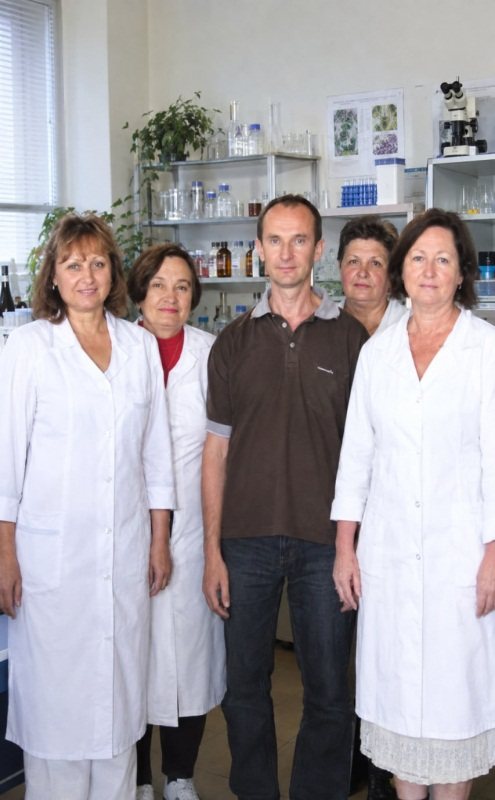
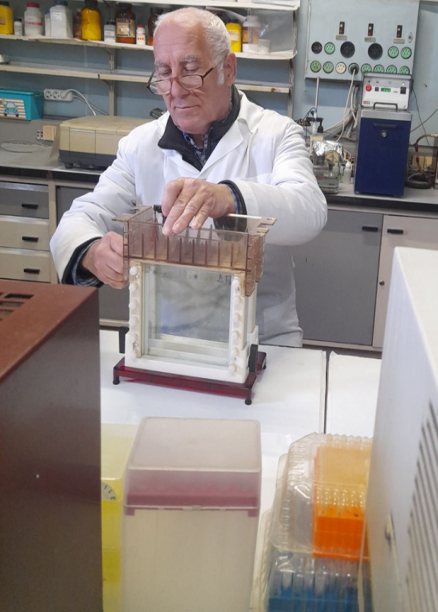
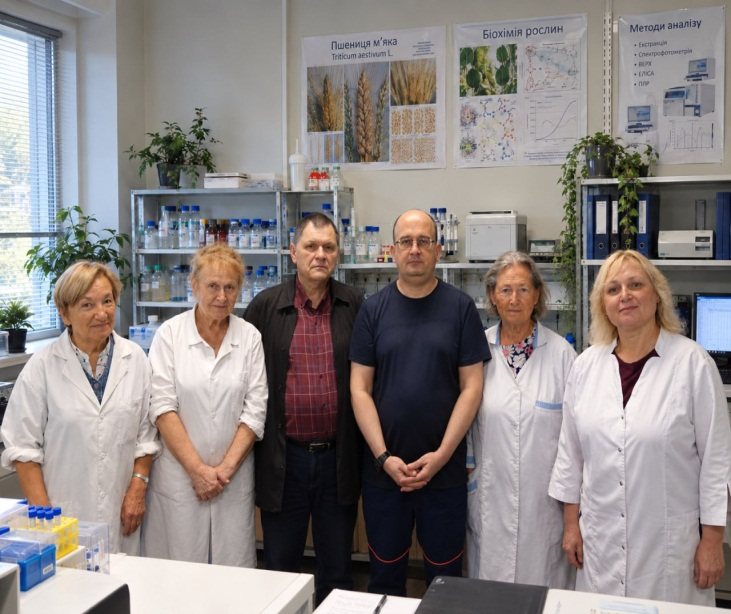
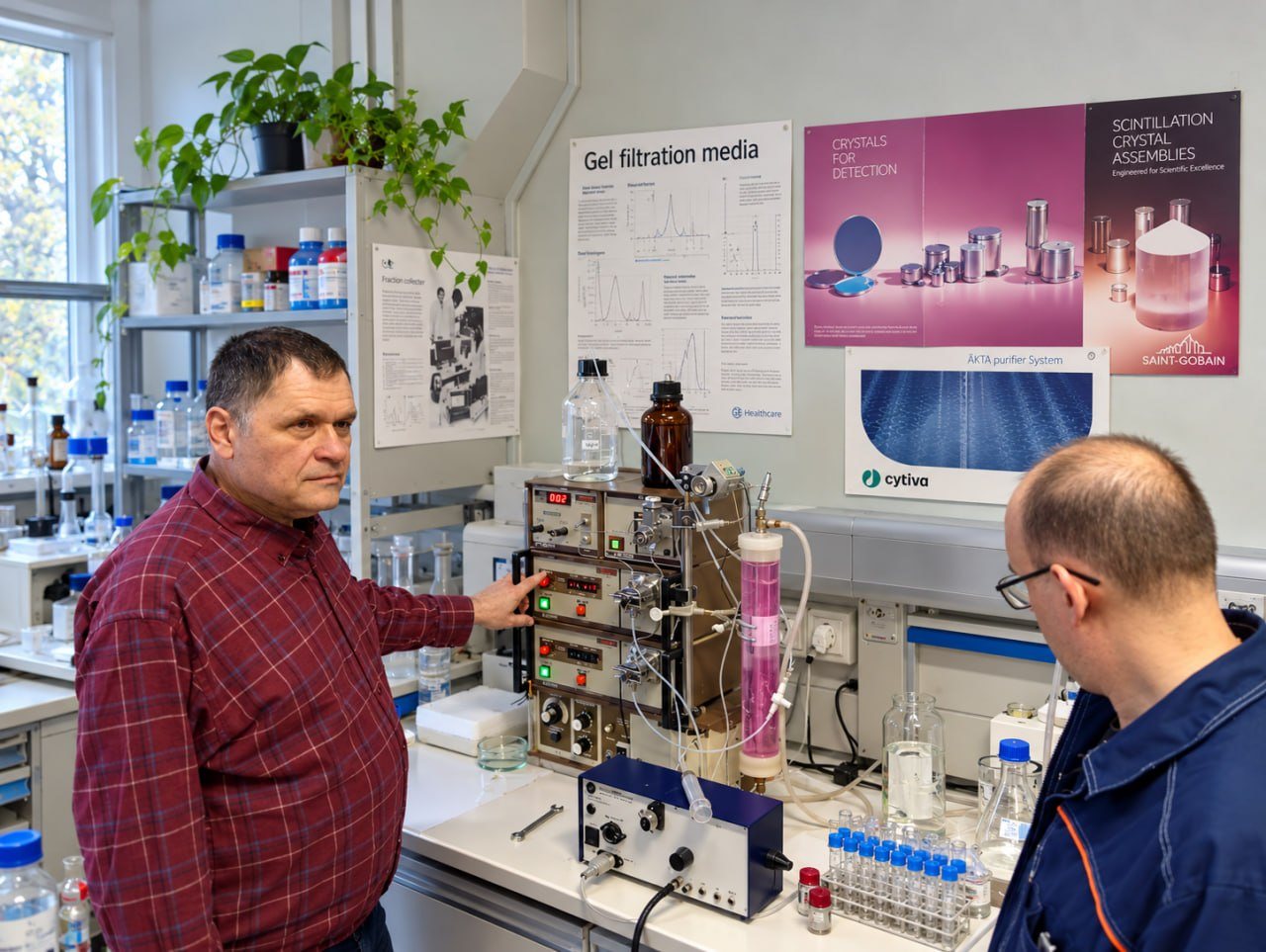
Plant Biochemistry Laboratory
Biochemical mechanisms of plant stress resistance, grain-quality criteria, and biochemical evaluation of breeding material of cereal, grain-legume and oil crops.
Main lines of work
- Study of the physiological and biochemical mechanisms by which plants form resistance and adapt to biotic and abiotic stressors, in order to identify biochemical markers of resistance.
- Study of the biochemical criteria that determine grain quality in cereal, grain-legume and oil crops, for selecting genotypes for food and feed use.
- Biochemical evaluation of breeding material of cereal, grain-legume, groat and oil crops in relation to grain quality and to plant resistance to diseases and adverse abiotic environmental factors.
NAAS programme tasks 2026–2030
NAAS research-programme tasks carried out by the laboratory in 2026–2030:
Key scientific achievements
The mechanisms by which proteinases and their inhibitors participate in the synthesis, modification and breakdown of proteins in cereals have been studied, showing their important role in regulating biosynthesis and accumulation of storage proteins and in forming resistance of cereals to phytopathogens and frost. The role of lipid- and redox-signalling enzymes, carbohydrate and phenolic metabolism, protective proteins and signalling molecules in forming the resistance of cereals to fungal infections and adverse abiotic factors has been established.
Methodologies for evaluating and selecting breeding material for resistance to fungal pathogens (fusarium, alternaria, helminthosporium) and for drought and heat tolerance by biochemical indicators have been theoretically substantiated and experimentally implemented. Ukrainian patents were granted for them (patent No. 2639, declaratory patent No. 43280A, utility-model patent No. 49643).
It has been shown that infection of cereals (wheat, barley, maize), grain legumes (soybean, pea, chickpea) and sunflower by viral and fungal diseases, as well as the effect of abiotic stressors (water deficit, hyper- and hypothermia), on the one hand reduce yield indicators and alter the functioning of the photosynthetic apparatus, and on the other hand restructure cell metabolism through disturbed oxidative homeostasis and redox-signalling reactions, which induces protective mechanisms — in particular antioxidant defence components and protective proteins.
The maintenance of oxidative homeostasis was found to differ in wheat and soybean plants affected by viral and fungal pathogens and exposed to abiotic stressors, depending on the stress factor, the degree of damage and the genotype’s resistance. The induction of protective responses in cereals using biologically active substances (salicylic and jasmonic acids, lectins, flavonoids) was demonstrated. These findings provided the theoretical basis for developing rapid methods of assessing and increasing genotype resistance to fungal and viral pathogens and drought (methodical guidelines).
Biochemical approaches to assessing the seed quality of grain legumes have been substantiated and implemented, with biochemical criteria proposed (protein content; albumin, globulin and glutelin composition; protein digestibility; fat content and fatty-acid composition; flavonoids, anthocyanins, phytates, fibre, carbohydrates, free proline; lipoxygenase, trypsin-inhibitor and lectin activity). They allow breeders to choose crossing pairs at early stages whose seed biochemistry meets modern world requirements. Ukrainian utility-model patents No. 42181 and No. 107671 were granted for these approaches (methodical guidelines).
Biochemical criteria have been proposed for evaluating the grain and vegetative organs of wheat and barley in relation to the food and feed value of grain (grain protein content, protein yield per unit area, relative protein content per 1,000 grains, protein and sugar content in vegetative organs, the component composition of wheat gliadins, the isoenzyme composition of barley root superoxide dismutase). The methods are highly reproducible and accurate, need little experimental material and allow breeding material to be evaluated quickly (methodical guidelines).
A method has been developed for isolating and identifying β-carotene in maize grain by high-performance liquid chromatography; it was used to analyse the β-carotene content of Ukrainian and foreign maize genotypes.
A set of biochemical traits responsible for different aspects of seed quality has been developed and tested on the breeding material of the sunflower breeding department: impurity and oil admixture, fat content and fatty-acid composition, acid, peroxide and iodine values, tocopherol and phospholipid content (methodical guidelines).
Services for external organisations
The laboratory performs biochemical analyses for external organisations for the following indicators:
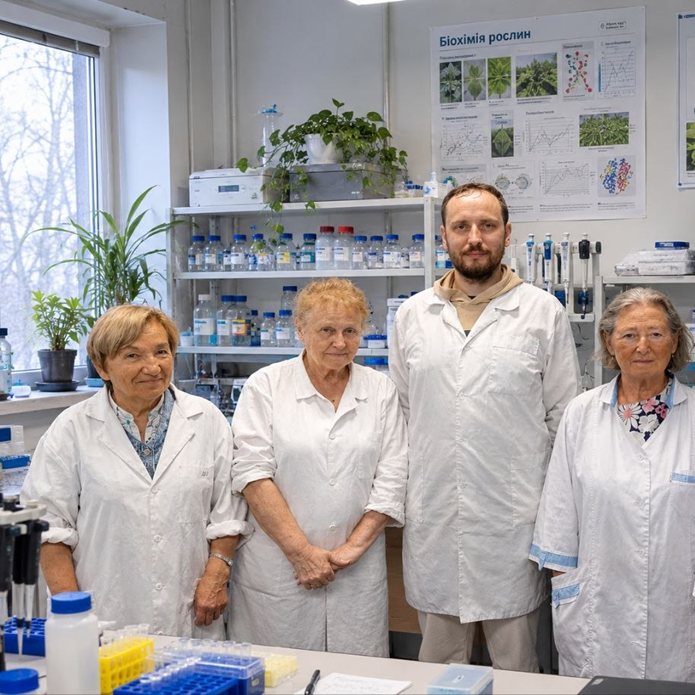
The team at work